ReformingGovernment.org Facebook X / Twitter
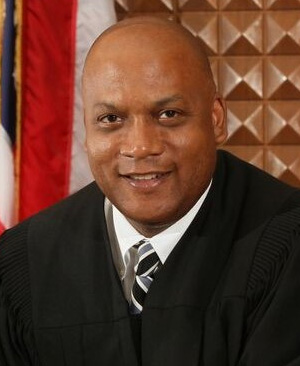
M. Joseph Donald
Court of Appeals Scorecards · Deputy Chief Judge

M. Joseph Donald

Deputy Chief Judge, District I—Milwaukee

Career History:
Appellate Judge, Court of Appeals - District I (appointed 2019)
Circuit Court Judge, Milwaukee County (appointed 1996; elected 1997, 2003, 2009, 2015)
Assistant City Attorney - City of Milwaukee (1989-96)
Law Clerk for Milwaukee County Circuit Court (1988-89)

To read the full official biography, click here. Source: wicourts.gov

About

About Judge Donald.

M. Joseph Donald is the Deputy Chief Judge of the Wisconsin Court of Appeals — District I, where he has served since 2019. District I covers Milwaukee County.

Before joining the Court of Appeals, Donald spent more than two decades as a Milwaukee County Circuit Court Judge, first appointed in 1996 and elected five times by voters. Earlier in his career, he worked as an Assistant City Attorney for the City of Milwaukee, and as a law clerk for the Milwaukee County Circuit Court.

Donald was appointed to the Court of Appeals in 2019.

Featured Opinions

Notable opinions.

Lorbiecki v. Pabst

Joined the majority. Donald provided the second vote behind Chief Judge White's careful read of Wisconsin's damages statute, helping lock in a result that nearly doubled the plaintiff's recovery (from roughly $7M to $13.4M). He did not write separately. The case is representative of his term—his vote went consistently to the more disciplined, text-tracking opinions District I produced.

Donald did not write his own opinion in this case. He read what Chief Judge White wrote and signed on. His vote helped make her opinion the law of the case. That is how three-judge panels work. You can tell a lot about a judge by which colleagues he tends to join. Donald's vote went to the careful, by-the-book opinion in this case—not to a position that stretched the law past its words.

State v. Adams (2024 WI App 44)

Joined the majority. A juvenile carjacking-homicide case raising whether a 13-year-old defendant in adult court was entitled to discovery before his preliminary examination. Donald joined a balanced reading that filled in language the Wisconsin Supreme Court left open in Kleser: juveniles get the State's introduced evidence plus more on a particularized showing of need. Adams did not meet the standard, but future juvenile defendants now have a clearer framework. Disciplined gap-filling, not freelancing.

Download the Full Report (PDF)
← Back to Court of Appeals Scorecards