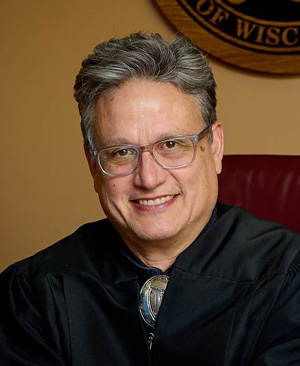
Children's Hospital v. Wauwatosa (2025 WI App 43)
Authored the majority. Wisconsin's tax-exemption statute reaches property "used exclusively" for hospital purposes. Colón refused to extend that phrase to cover a building under construction. His point was direct: the legislature draws the lines on tax exemptions, not the courts, and if the lines need to be redrawn the legislature can do it. Drew a dissent from Chief Judge White.
The law says a property-tax break only applies to buildings "used exclusively" for hospital purposes. Children's Hospital wanted the break for a tower that was only 14 percent built. Colón said no. A building that is mostly steel beams and dirt is not "used" for anything yet, much less "used exclusively" for hospital work. He stuck to what the law actually says. That is the right answer. If lawmakers want construction sites to qualify, they can change the law to say so.
Hess v. WEC (2024 WI App 46)
Authored the majority. An election-law dispute over whether the Wisconsin Elections Commission could accept nomination papers with minor formatting issues. Colón traced the statutes the legislature actually passed—what the Commission was authorized to do, what the rules said, what "shall" meant in context—and resolved the dispute on those terms. Justice Rebecca Grassl Bradley later cited the reasoning approvingly in her Brown v. WEC dissent.
A Republican candidate turned in nomination papers to get on the ballot. The pages had been photocopied poorly, so some words looked blurry. The Assembly Democrats challenged the papers and tried to keep him off the ballot. The Wisconsin Elections Commission said the papers were good enough. Colón agreed. He walked through the law step by step. The papers had all the required information. The blurry copies did not change that. He got the law right, and his work cleared the way for voters—not technical glitches—to decide the election.
State v. Adams (2024 WI App 44)
Joined the majority. A procedural-rights case for juveniles charged in adult criminal court. The Wisconsin Supreme Court had recognized that juveniles get "some latitude" before the probable-cause hearing but never said what that meant. Colón joined Geenen's careful answer: latitude exists, but it requires the defendant to identify how the requested materials might negate the charge. The court neither inflated the right beyond what precedent supported nor read it out of existence.