About
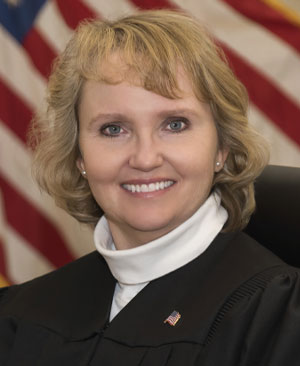
About Judge Grogan.
Shelley A. Grogan is a judge on the Wisconsin Court of Appeals — District II, where she has served since 2021. District II covers Waukesha, Racine, Kenosha, and the southeastern counties of Wisconsin.
Before joining the Court of Appeals, Grogan briefly served as the Muskego Municipal Judge in 2020–2021. She spent the previous 21 years working inside the Wisconsin court system as a judicial assistant and law clerk — most notably for Wisconsin Supreme Court Justice Rebecca Grassl Bradley, and earlier for several Court of Appeals judges in District I including the Hon. Ralph Adam Fine, the Hon. Kitty Brennan, and the Hon. Ted E. Wedemeyer, Jr. She has also served as an adjunct professor at Marquette University Law School since 2019.
Grogan was elected to the Court of Appeals in 2021.
Featured Opinions
Notable opinions.
WMC v. DNR (2024 WI App 18)
Authored the majority. The major PFAS-contamination case. Grogan held the Department of Natural Resources could not enforce the Spills Law against polluters until the agency went through formal rulemaking—agencies do only what the legislature actually authorized. The Wisconsin Supreme Court reversed 5-2, but Justices Ziegler and Grassl Bradley dissented from the reversal and would have kept her rule.
PFAS chemicals don't break down in water and have been found in many Wisconsin wells. The state's Department of Natural Resources wanted to use the Spills Law to make polluters clean it up. Grogan said the agency had to first go through a public process to write formal rules listing which chemicals count. The Wisconsin Supreme Court reversed 5-2, but two justices agreed with Grogan. Reasonable people disagree on this one. Grogan's view was that agencies should not enforce broad rules without first telling the public what those rules are.
State v. West
Authored the majority. Wisconsin's first published interpretation of the drug-aggregation statute, § 971.365(1)(b), which combines amounts from multiple sales into a single charge. Grogan rejected a reading that would have made some of the legislature's words meaningless—applying the basic rule that statutes should be read so every word does work.
A defendant was charged for several drug sales added together as one big charge. Wisconsin courts had never explained how the law for combining drug amounts was supposed to work. Grogan was the first to do it. She rejected a reading of the law that would have made some of the legislature's own words meaningless. That is a basic rule of reading laws: every word counts. She got it right.
Abby Windows v. LIRC; US Cellular v. Fond du Lac County
Authored the majorities. Solid statutory-interpretation work in workers'-comp and municipal-tax disputes. Not headline cases, but they show the same method that defines her record: read the statute, apply the statute, check it against the rest of the act before reaching outside the text.
Two ordinary cases, one about workers' compensation and one about local property taxes. Neither will make the news. But each case was decided the same careful way: read the law, apply it, and don't reach past the words. That is the method Grogan uses across her docket.
Fish v. Bevco concurrence
Filed a concurrence. Grogan agreed with the result but added a sharper analysis of where the Labor and Industry Review Commission's interpretation would lead—using a worked-out hypothetical to expose how the agency's reading would generate absurd outcomes. The concurrence is more rigorous than the majority it joins.
A "concurrence" is when a judge agrees with the result but wants to add her own thinking. Grogan agreed her panel got the right answer, but she wanted to push the analysis further. She walked through what would happen if the state agency's reading of the law were applied to other cases. The result would be unfair and confusing. By spelling that out, she made the case stronger and put the agency on notice. Sound work that goes beyond the minimum.