About
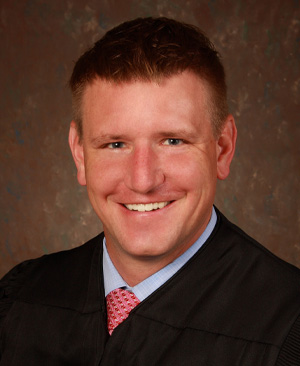
About Judge Hruz.
Thomas M. Hruz is a judge on the Wisconsin Court of Appeals — District III, where he has served since 2014. District III covers the northern and western counties of Wisconsin, including the Wausau and Eau Claire regions.
Before joining the Court of Appeals, Hruz practiced law in private practice for a decade. Earlier in his career, he served as a law clerk to the Hon. John L. Coffey on the U.S. Court of Appeals for the Seventh Circuit and to Wisconsin Supreme Court Justice David T. Prosser, Jr.
Hruz was appointed to the Court of Appeals in 2014 and re-elected in 2016 and 2022.
Featured Opinions
Notable opinions.
Frankenthal v. West Bend Mutual (2024 WI App 71)
Authored the majority. A property-insurance dispute over whether a downtown Green Bay building was "vacant" when the owner was actively trying to lease it. Hruz held that the policy term "customary operations" was ambiguous and decided the case on the narrowest available grounds, declining to pick a single best interpretation. Ambiguous contract language drafted by an insurer is construed against the insurer—a long-established Wisconsin rule, applied without expansion.
An insurance-coverage fight with a lot of moving parts. The lawyers asked the court to make broad new rules about insurance law. Hruz did not. He decided the dispute on the smallest ground he could and left the bigger questions for another case or for the legislature. That kind of restraint matters. Big appeals court rules bind every future case in the state. A judge who only decides what is in front of him keeps the rule book from getting bloated.
Kohler Co. v. DNR
Joined the majority. An agency-review case. The technical framework has two separate tracks—courts take a hard look at agency legal conclusions but defer on factual findings. Panels can collapse the two if they're not careful. Hruz's third vote helped hold the lines exactly where the framework draws them.
Kohler Co. wanted a permit to fill in some wetlands. The state environmental agency said no. The case turned on a basic question: when an agency makes a legal call, does the court check that work fresh, or does it just defer to the agency? Wisconsin courts answer differently for different parts of the case—legal questions get a fresh look, factual questions get more deference. Hruz's vote helped keep that distinction clean. Treating both kinds of questions the same way would let agencies do the legislature's job.
Outagamie County v. M.J.B. (2025 WI App 37)
Joined the majority. An involuntary-commitment case where the County filed one of two required examiner's reports the day before the hearing, not 48 hours ahead as the statute requires. Hruz's vote helped hold the County to the deadline rather than excuse the violation as harmless. The case sits at the intersection of textualism and due process—two strands of the panel's work this term that pulled in the same direction.
Van Oudenhoven v. DOJ (2024 WI App 38)
Joined the majority. A federal-firearms case where the central question was whether Wisconsin expungement reaches far enough to undo a 1994 misdemeanor domestic-violence conviction for federal purposes. Hruz joined the panel's answer: it does not. The court did not have a Second Amendment issue to decide—the plaintiff didn't raise one. Hruz's vote helped reach the disciplined statutory result the law required, regardless of the underlying policy questions about expungement and gun rights.