ReformingGovernment.org Facebook X / Twitter
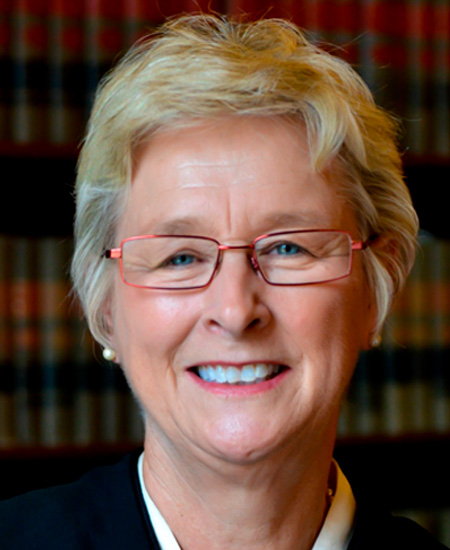
Ann Walsh Bradley
Supreme Court Scorecards · Chief Justice (May–June 2025)

Ann Walsh Bradley

Chief Justice (May–June 2025)

Justice Ann Walsh Bradley is a native of Richland Center, Wisconsin. She was a high school teacher before entering the University of Wisconsin Law School, where she earned her law degree. Justice Bradley began her judicial career as a circuit court judge in Marathon County. She was first elected to the Wisconsin Supreme Court in 1995, becoming the first woman in the state's history to join the Court by being elected rather than appointed to the position. She was twice re-elected in 2005 and 2015. To read her full biography, click here.

About

About Justice Bradley.

Ann Walsh Bradley served on the Wisconsin Supreme Court from 1995 until her retirement in the summer of 2025. She was the first woman in state history elected — rather than appointed — to the court. During her final two months on the bench, from May through June 2025, she served as Chief Justice.

A native of Richland Center, Wisconsin, Walsh Bradley taught high school before going to law school. She earned her law degree from the University of Wisconsin Law School in Madison. Before joining the Supreme Court, she served as a circuit court judge in Marathon County.

Walsh Bradley was first elected to the Wisconsin Supreme Court in 1995 and won statewide re-election in 2005 and 2015. She chose not to seek a fourth ten-year term, retiring in 2025 as one of the longest-serving justices in modern state history.

2025 Term · Composite Score

How they scored.

Composite
59.45%
5-Metric Methodology
78.90
Critical Cases Alignment
40% (4/10)

Composite combines the 5-metric methodology score (50%) with critical-cases alignment (50%) per the IRG Court Watch scoring framework. Read the full methodology →

Judicial Profile · 2024–25 Term

Methodology and posture this term.

Justice Bradley's 2024–25 term reflects high technical consistency in administrative, jurisdictional, and civil-procedure cases, and a more flexible approach in high-profile structural disputes. Her authored majorities in Morway v. Morway (procedural finality), State ex rel. DOC v. Hayes (probationer due process and a "good cause" threshold for hearsay), and Hubbard v. Neuman (a narrow, fact-bound textual reading) reflect disciplined application of established frameworks. Her joinders in Evers v. Marklein, Kaul v. Urmanski, and Brown v. WEC placed her with majorities that discarded recent precedent or imported federal doctrine into Wisconsin constitutional analysis. Her State v. H.C. concurrence acknowledged that the statute was silent on the burden of proof at the dispositional phase and supplied a preponderance standard derived from the chapter's "purposes and policies" rather than from text.

In Their Own Words

Notable quotes.

“When examining the sufficiency of a complaint, we accept as true all facts set forth in the complaint along with all reasonable inferences drawn from those facts.”

Hubbard v. Neuman (¶15, majority)

“Finality is based on the text of the judgment or order at issue, not the subsequent actions taken by the circuit court nor the court’s intent.”

Morway v. Morway, 2025 WI 3 (¶20, majority)

“A judgment or order disposes of the entire matter in litigation when the text of that judgment or order leaves nothing else to be decided as a matter of substantive law.”

Morway v. Morway, 2025 WI 3 (¶25, majority)

“We have repeatedly said that the subsequent actions of the court have no bearing on the finality of a prior order.”

Morway v. Morway, 2025 WI 3 (¶29, majority)

“The question of the finality of a judgment or order is not new to this court. We have wrestled with it over the years. This case presents yet another opportunity to examine the statutes alongside our precedent and to apply them to the facts at hand.”

Morway v. Morway, 2025 WI 3 (¶15, majority)

“In Wambolt v. West Bend Mutual Insurance Co., we determined that final judgments or orders must explicitly dispose of the entire matter in litigation. Mere legal reasoning and decision-making is not sufficient to make a judgment or order final.”

Morway v. Morway, 2025 WI 3 (¶22, majority)
Download the Full Report (PDF)
← Back to Supreme Court Scorecards