ReformingGovernment.org Facebook X / Twitter
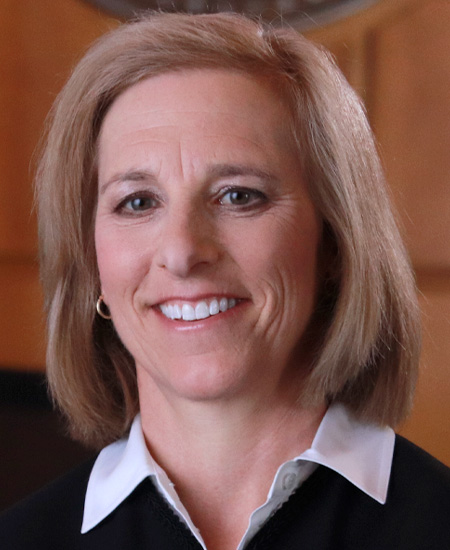
Jill J. Karofsky
Supreme Court Scorecards · Chief Justice (from July 2025)

Jill J. Karofsky

Chief Justice (from July 2025)

Chief Justice Jill J. Karofsky was elected to the Wisconsin Supreme Court on April 7, 2020 and took office August 1, 2020. Before her election to the Supreme Court, Justice Karofsky served as a judge on the Dane County Circuit Court to which she was elected in 2017. To read her full biography, click here.

About

About Justice Karofsky.

Jill J. Karofsky is the Chief Justice of the Wisconsin Supreme Court, a role she assumed in July 2025. She has served on the court since August 2020.

Before joining the Supreme Court, Karofsky served as a Dane County Circuit Court Judge, to which she was elected in 2017. Earlier in her career, she worked as a prosecutor — including as the head of the state's Office of Crime Victim Services within the Wisconsin Department of Justice — and as an attorney in private practice.

Karofsky was elected to the Wisconsin Supreme Court in April 2020 by defeating then-Justice Daniel Kelly. Her ten-year term runs through 2030.

2025 Term · Composite Score

How they scored.

Composite
59.60%
5-Metric Methodology
79.20
Critical Cases Alignment
40% (4/10)

Composite combines the 5-metric methodology score (50%) with critical-cases alignment (50%) per the IRG Court Watch scoring framework. Read the full methodology →

Judicial Profile · 2024–25 Term

Methodology and posture this term.

Chief Justice Karofsky's 2024–25 record shows her most disciplined formalist work in joinders to unanimous or broad-majority opinions, and a different methodological register in her authored work in high-profile cases. Her joinders in WEC v. LeMahieu, Wisconsin Legislature v. DPI, and Kaul v. Wisconsin State Legislature applied original public meaning, the whole-text canon, and the avoidance canon with care. Her authored majority in Lemieux v. Evers embraced what she described as a "quasi-legislative" role for the governor in the partial-veto context, and her separate writings in State v. Stetzer, State v. Molde, and Kaul v. Urmanski draw on sociological framing—including trauma research and femicide statistics—alongside the legal question presented.

In Their Own Words

Notable quotes.

“Our constitution does not limit the governor\u2019s partial veto power based on how much or how little the partial vetoes change policy, even when that change is considerable.”

LeMieux v. Evers, 2025 WI 12 (¶28, majority)
“The plain meaning of 'word' does not include numbers written out using digits, and the plain meaning of 'letters' does not include digits. . . . Simply put, letters and digits are not interchangeable for purposes of § 10(1)(c).”

LeMieux v. Evers, 2025 WI 12 (¶27, majority)

“Section 10(1)(c) did not include the terms 'digit' or 'number'; it invoked just 'word' and 'letter.' We must give meaning to those omissions. The only logical interpretation here is that the people of Wisconsin were prohibiting the deletion of letters to create new words.”

LeMieux v. Evers, 2025 WI 12 (¶27, majority)

“Our constitution vests the governor with 'broad and expansive,' 'quasi-legislative' partial veto power. Thus, we accept that the constitution 'anticipate[s] that the governor's action may alter the policy as written in the bill.'”

LeMieux v. Evers, 2025 WI 12 (¶15, majority)

“We uphold the 2023 partial vetoes, and in doing so we are acutely aware that a 400-year modification is both significant and attention-grabbing. However, our constitution does not limit the governor's partial veto power based on how much or how little the partial vetoes change policy, even when that change is considerable.”

LeMieux v. Evers, 2025 WI 12 (¶28, majority)
Download the Full Report (PDF)
← Back to Supreme Court Scorecards